Applying BIM technology to project design, HVC Group gradually raises the construction standards
20/09/2019
BIM is becoming a new trend and almost a mandatory standard in the construction industry worldwide. HVC Group quickly applies this technology to Vinhomes Smart City Tay Mo-Dai Mo project and builds a roadmap to apply to other projects so that the completion of the work becomes faster, accurate and lower cost.
BIM (Building Information Modeling) is the process of creating and using digital models for the entire life cycle of a building, from the design, construction, to its operation, maintenance and dismantlement. All information and data related to the construction throughout its life cycle are stored and exploited through a unified and linked information model. Any changes to the components of the model will be automatically updated for the entire system. Therefore, the application of BIM will facilitate the exchange and cooperation between the parties involved, optimizing the design, construction and management of works.
The advantages of BIM are centralized data management, intuitive model design, cost and time savings, increased interoperability between departments; limiting risks arising during construction. However, the transition from an old model (2D) to a new model (BIM) requires each enterprise to have relatively large initial investment steps: infrastructure investment costs, copyright costs. software, consultants and implementers, train employees to use new software, ...
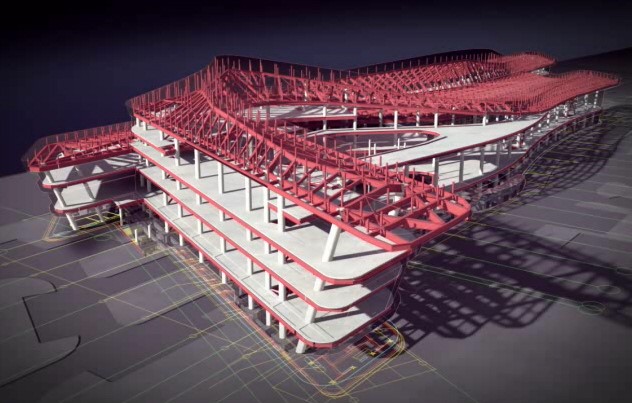
An example of a BIM model in construction
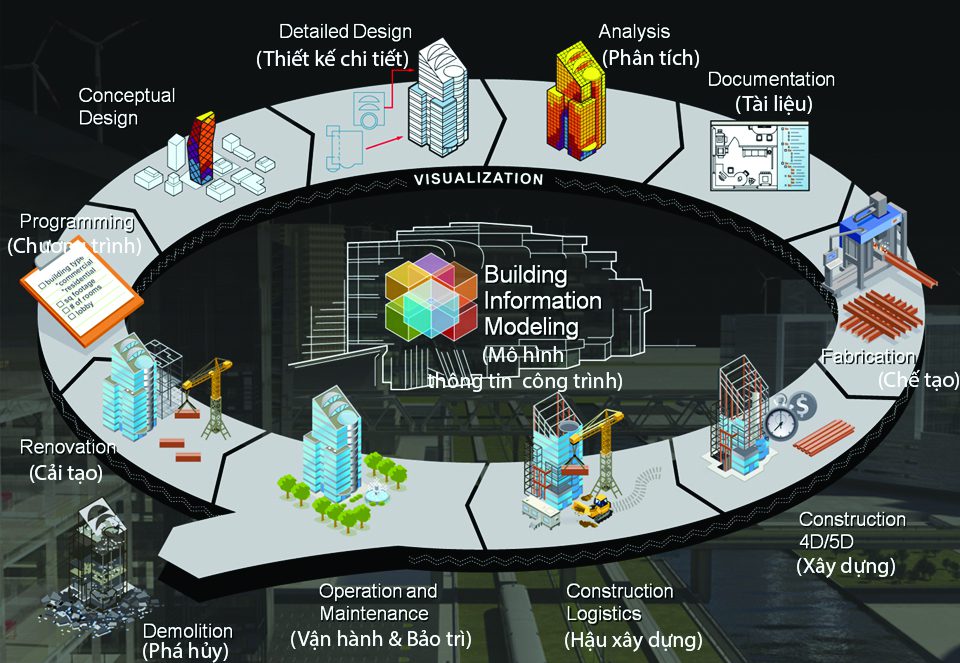
 BIM - Database used uniformly throughout the life cycle of works
In Vietnam, according to the government's roadmap, in 2021 BIM will become a standard in construction works, this is one of the important solutions to approach the upcoming Industry 4.0 revolution in the construction industry.
With the background of a technology company, HVC Group has quickly applied BIM technology to Vinhomes Smart City Tay Mo - Dai Mo project. Specifically, HVC Group applies BIM 5D technology - Level 2 to the project to increase progress, increase quality, control collisions, control materials (avoid over-ordering or missing) to minimize the expenses incurred during the construction process. In particular, the application of BIM technology has helped the investor manage construction, operate the works in a smarter way - meeting the criteria of the first world-class smart city in Vietnam.
Video simulating the HVC Group's application of BIM technology to the design
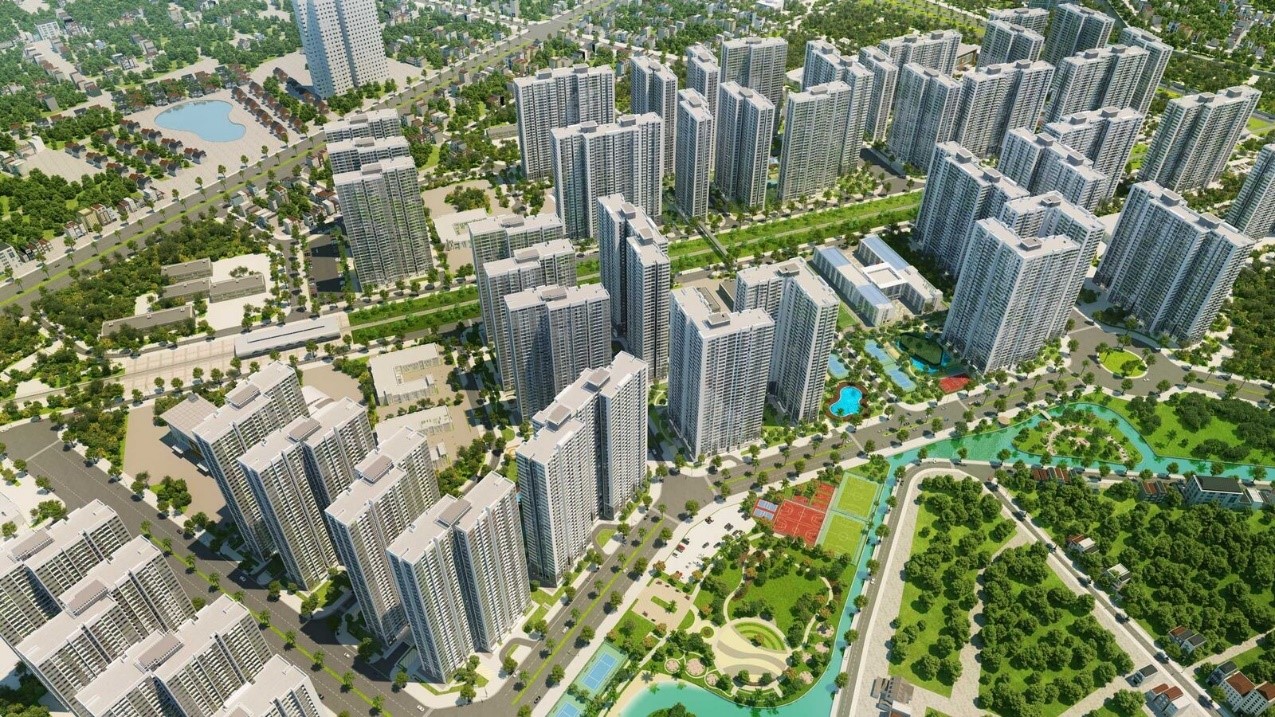
Vinhomes Smart City Tay Mo - Đai Mo
Here are some pictures designed by BIM technology for HVC Group's bidding items at Vinhomes Smart City Tay Mo project showing vivid visuality in the design and scale of the project:
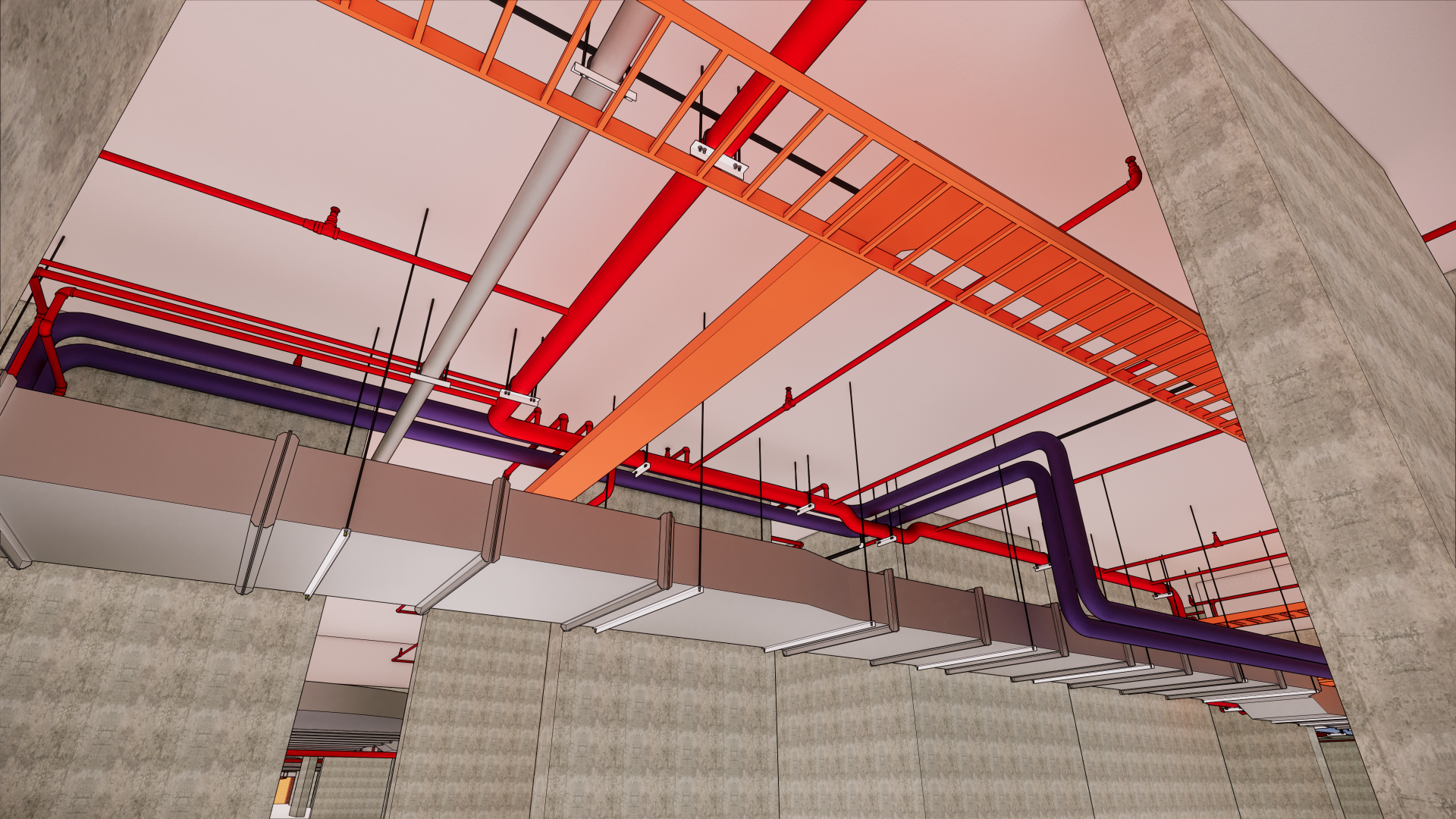
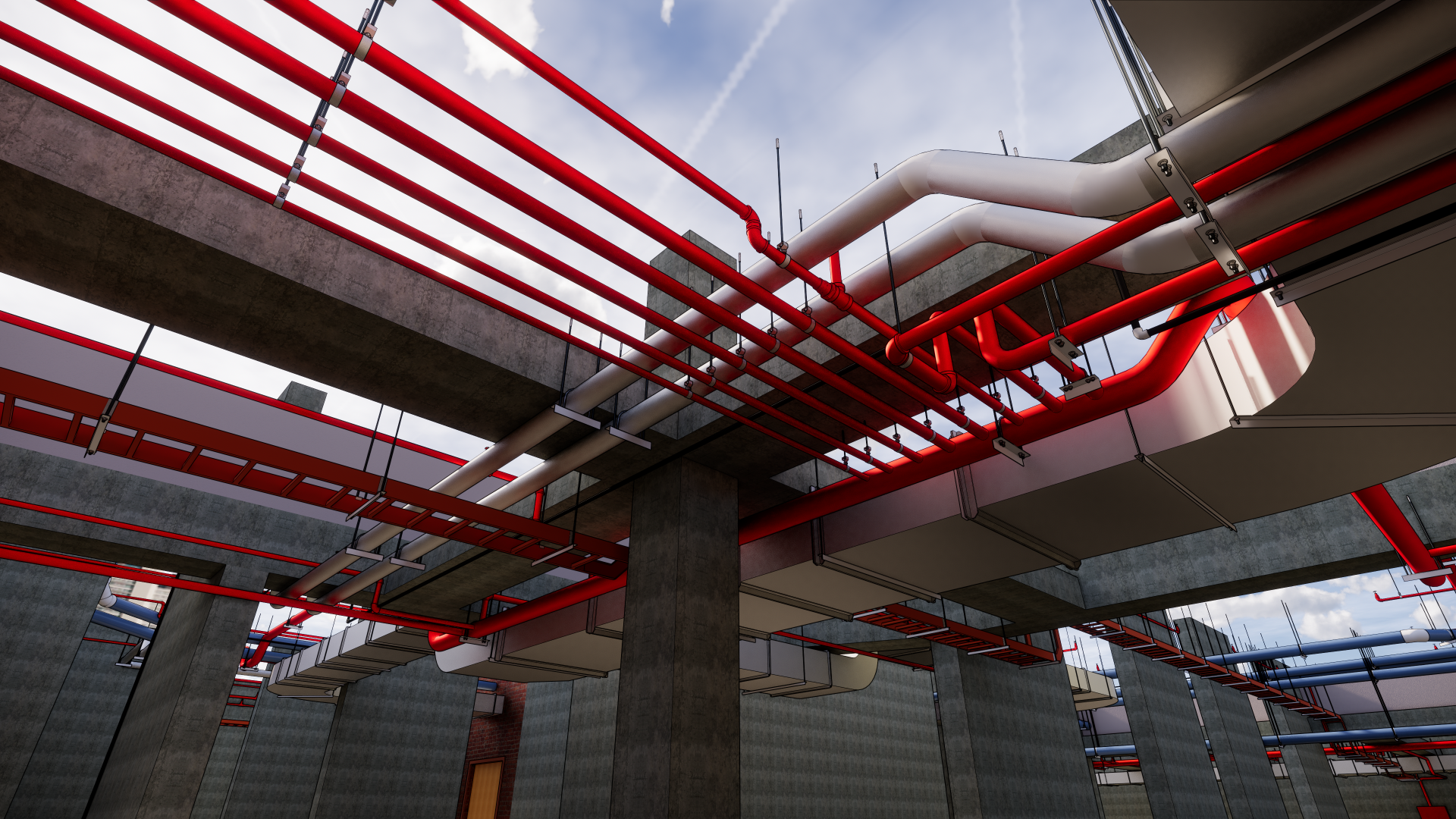
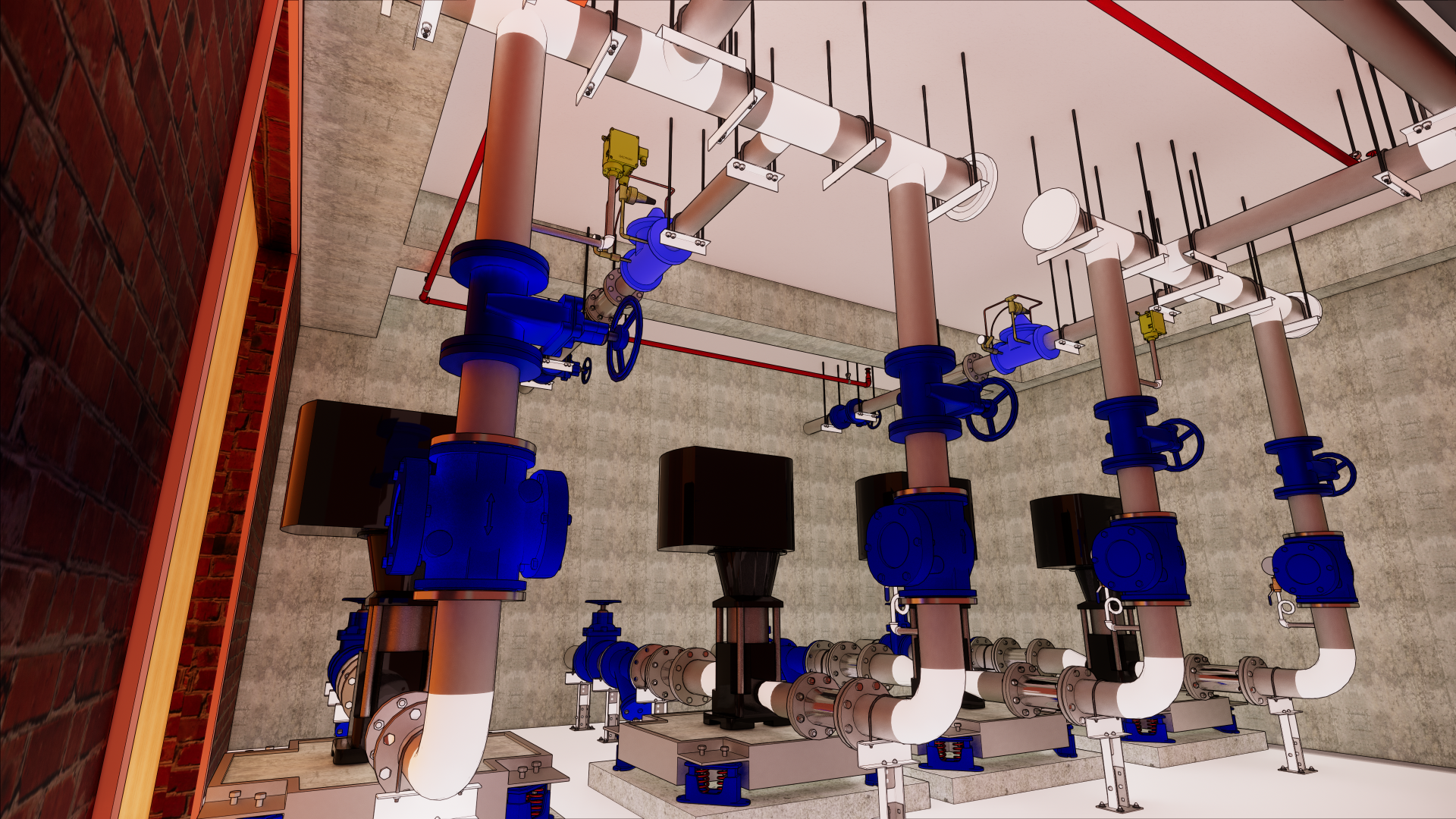
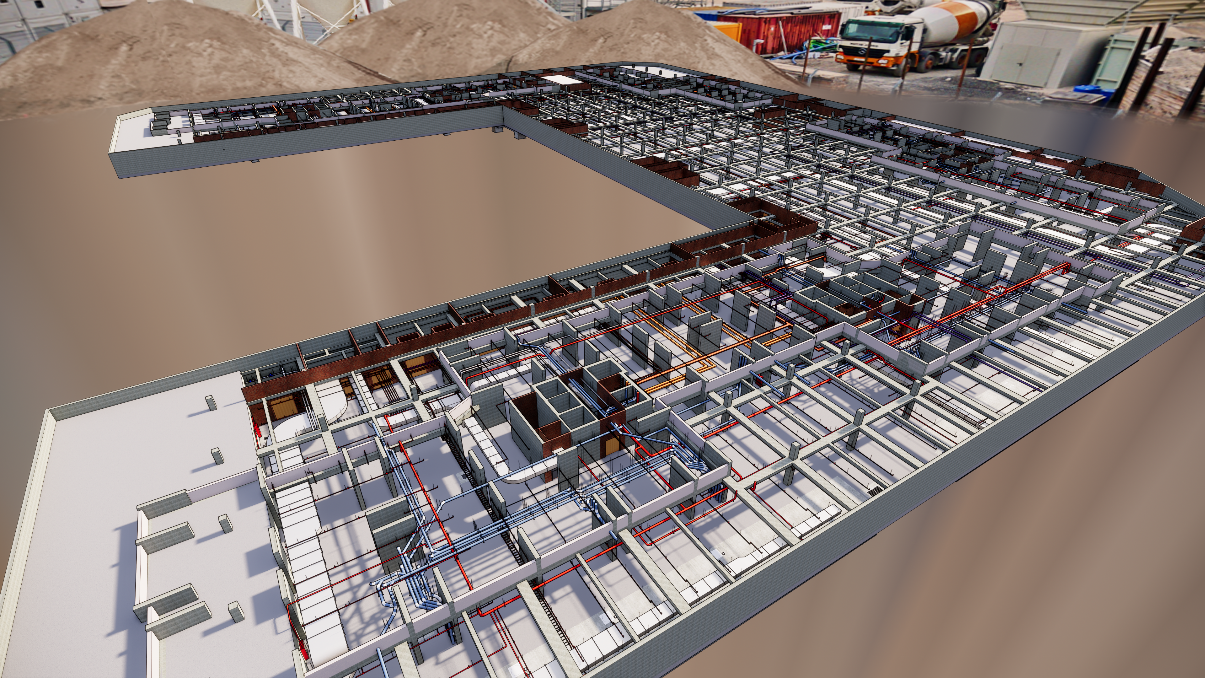
BIM is considered as one of the important solutions to approach the 4.0 technology revolution of Vietnam's construction industry - a revolution that creates a connection between the real world and the virtual world based on digital technology. . The access to and use of BIM has shown the high sensitivity and investment of HVC Group with new technology.
>> Xem thêm: Hệ thống thông gió




























 info@hvcgroup.net
 024.3540.2246
